SHINE WITH BRILLIANCE ALWAYS
Having a row of lighter teeth can help to increase your confidence and overall appearance. However, persistent stains or a yellowish tinge on the teeth sometimes cannot be removed with simple dental scaling and polishing.
Persistent stains or a yellowish tinge on the teeth sometimes cannot be removed with simple dental scaling and polishing. Such deep stains tend to require a stronger approach, which can be addressed through professional teeth whitening services conducted by a licensed dentist in Singapore.
Teeth whitening is a targeted dental approach that employs peroxide-based bleaching agents to break down and dissolve stubborn stains, offering a level of whitening that may be difficult to achieve with over-the-counter whitening kits alone.
This professional treatment conducted by dentists not only helps to restore the brightness of your smile but also targets surface discolourations caused by coffee, tea, cigarettes, and wine, among other lifestyle factors.
Not all stains are the same, and understanding the type you have can help your dentist recommend the right approach.
Extrinsic stains sit on the surface of the tooth and are typically caused by:
Intrinsic stains occur within the tooth structure itself and can result from:
Extrinsic stains generally respond well to whitening, since treatment targets the surface of the tooth. Intrinsic stains can be harder to address with whitening alone, and your dentist may recommend an assessment to determine whether whitening is likely to help, or whether an alternative approach would suit you better.
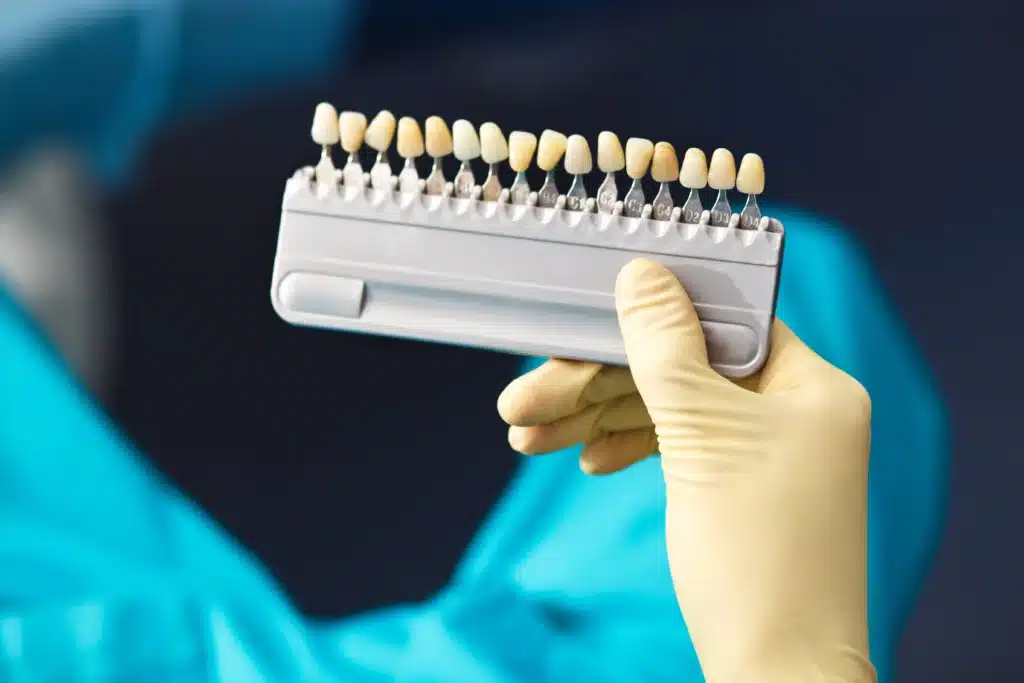
Teeth whitening services in Singapore are not just cosmetic enhancements; they are professional dental treatments. Beginning with a detailed consultation, your dentist will evaluate the condition of your teeth to come up with a personalised whitening strategy that aligns with your dental characteristics and aesthetic aspirations.
The heart of the treatment lies in the application of peroxide-based bleaching agents that delve beneath the enamel, targeting and oxidising the deep-seated stains that disrupt the natural whiteness of your teeth. Customised to each individual’s needs, the concentration of peroxide and the duration of its application may vary depending on the severity of discolouration and the desired outcomes.
Teeth with a yellowish hue tend to respond well to whitening, since the treatment targets that type of discolouration. Brown or grey-toned stains might not respond as well. Additionally, teeth whitening does not affect the colour of dental restorations such as caps, veneers, dental implants and crowns, or fillings. Discolouration resulting from medications or trauma might also not be amenable to the whitening process.
Typically, the teeth whitening treatment will be completed within an hour. It commences with the application of a gum-protective gel, followed by the careful application of a hydrogen peroxide-based whitening agent by a professional dentist onto all visible surfaces of your teeth. Depending on the selected approach, an activating light might be employed to enhance the teeth whitening gel’s properties. Furthermore, comfort and customisation are prioritised throughout this treatment, ensuring a pleasant experience leading to a brighter smile.
Chairside and Take-Home Teeth Whitening
from S$450 onwards
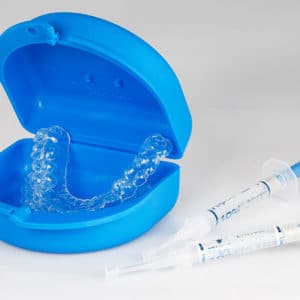
For the take-home teeth whitening kit, a customised tray is made which fits nicely over your teeth. You have to wear the whitening solution either overnight when you sleep or wear it as per the manufacturer’s or dentist’s instructions over a period of two weeks. The whitening solution comes in different concentrations depending on how white or light you want your teeth to be.
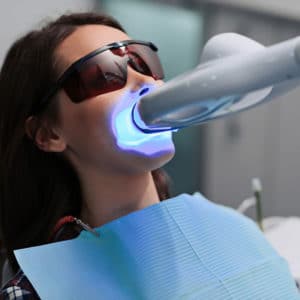
For chairside whitening, LED or laser is used to activate the teeth whitening gel over three cycles of approximately 20 minutes per cycle in the dental office. This process has to be safely administered by professional dentists.
Combination whitening pairs an initial chairside session with take-home trays for touch-ups afterwards. This approach aims to combine the faster initial results of in-clinic treatment with the ability to maintain your results at home.
Braces are a fixed orthodontic treatment that uses brackets and wires to gradually shift teeth into place over time. They are commonly considered for concerns such as overcrowding or gaps between teeth, which can affect the appearance of a smile and may also make brushing and flossing more difficult.
At Family Dental Centre, orthodontic options are available across clinics in Singapore, including clear aligners and traditional metal or ceramic braces. Because braces are fixed in place, they work without depending on the wearer to remember to use them, which is one reason they suit a wide range of alignment concerns. Which approach is more suitable depends on the type and severity of the misalignment, oral health, and lifestyle, and a dentist can advise based on individual needs.
| Professional In-Clinic / Prescribed Whitening | Over-the-Counter Products | |
|---|---|---|
| Dentist supervision | Administered or prescribed directly by a registered dentist | Self-administered, with no professional supervision |
| Active gel strength | Formulated with higher-strength whitening agents suitable for safe clinical use | Lower-strength, general-use concentrations |
| Oral assessment | Includes a preliminary dental check-up to assess tooth and gum health | No preliminary assessment to check for cavities or gum disease |
| Treatment customisation | Tailored to your specific tooth shade, bite, and sensitivity levels | Generic, one-size-fits-all trays or strips |
| Clinical safety and comfort | Gums and soft tissues are protected during treatment to manage sensitivity | Higher risk of uneven application or gum irritation if misused |
| Effectiveness | Suitable for addressing deeper or intrinsic stains; individual results vary | Primarily targets mild surface stains; results vary |
Teeth whitening results vary from patient to patient. A few factors are worth understanding before your treatment:
Whitening isn’t the right fit for every situation. Your dentist may recommend an alternative if:
Your dentist will assess your teeth and discuss which option, if any, is likely to give you the result you are looking for.
Teeth whitening is generally considered safe when performed or prescribed by a dental professional. A few things help keep it that way:
It is important to use products approved by dental health authorities and follow your dentist’s instructions to help minimise risk. Regular checkups and consultations can also help ensure your treatment is done appropriately.
Chairside whitening starts from $945, and take-home teeth whitening at FDC starts from S$504. The exact cost depends on several factors:
Speak with our team during your consultation for a personalised cost estimate.
Here’s what you can expect during the teeth whitening process at our dental clinic:
Before beginning the treatment, our dentist will conduct an initial consultation to assess your dental health and suitability for teeth whitening. During this stage, the dentist examines the teeth for any underlying issues such as decay, gum disease, or dental restorations that might affect the outcome.
The next step involves professional teeth cleaning to remove any surface stains, plaque, and tartar. This ensures that the whitening gel can make direct contact with the tooth surface, which allows for more even and optimal results.
To help protect your gums and soft tissues, a barrier will be applied around the teeth. This step helps to shield sensitive areas from the bleaching agents used during the treatment, ensuring that only the teeth are exposed.
A whitening gel containing a bleaching agent, such as hydrogen peroxide or carbamide peroxide, is carefully applied to the surface of the teeth. The gel is left on for a specific amount of time, allowing it to break down stains on the enamel and help lighten the tooth surface.
Some teeth whitening treatments may include using an LED or laser light to activate the bleaching gel and help speed up the whitening process. The light helps enhance the results by penetrating the enamel more thoroughly.
Once the desired whitening effect is achieved, the dentist will rinse the gel off your teeth and evaluate the results. You’ll receive aftercare instructions to help maintain your new shade, such as avoiding staining foods and beverages for a few days.
A few steps can help you get the most out of your treatment:
Your dentist will review your dental health during your consultation and let you know if any preparatory treatment is needed first.
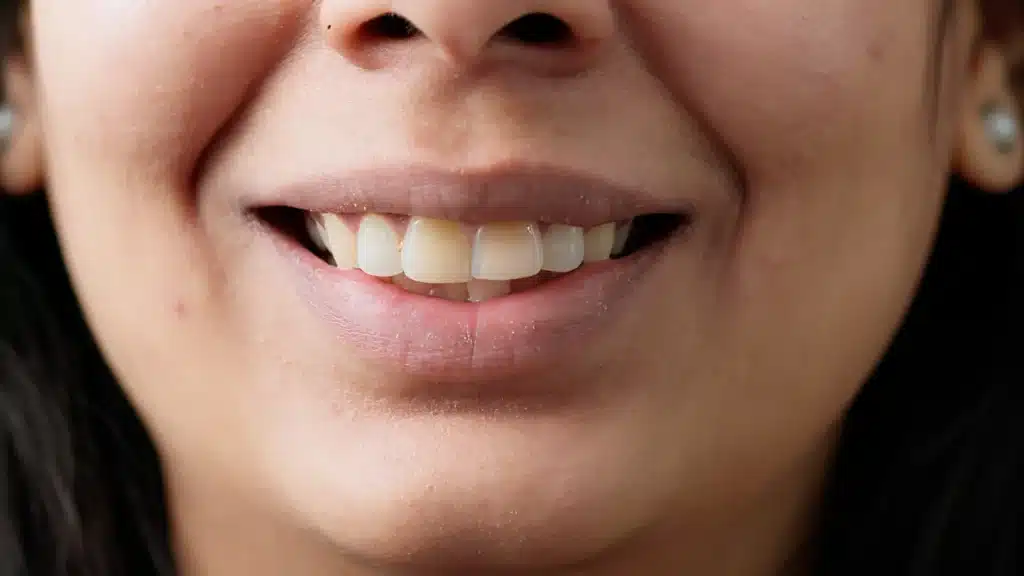
After your teeth whitening treatment, it is essential to follow proper post-treatment care to maintain the results and promote oral health.
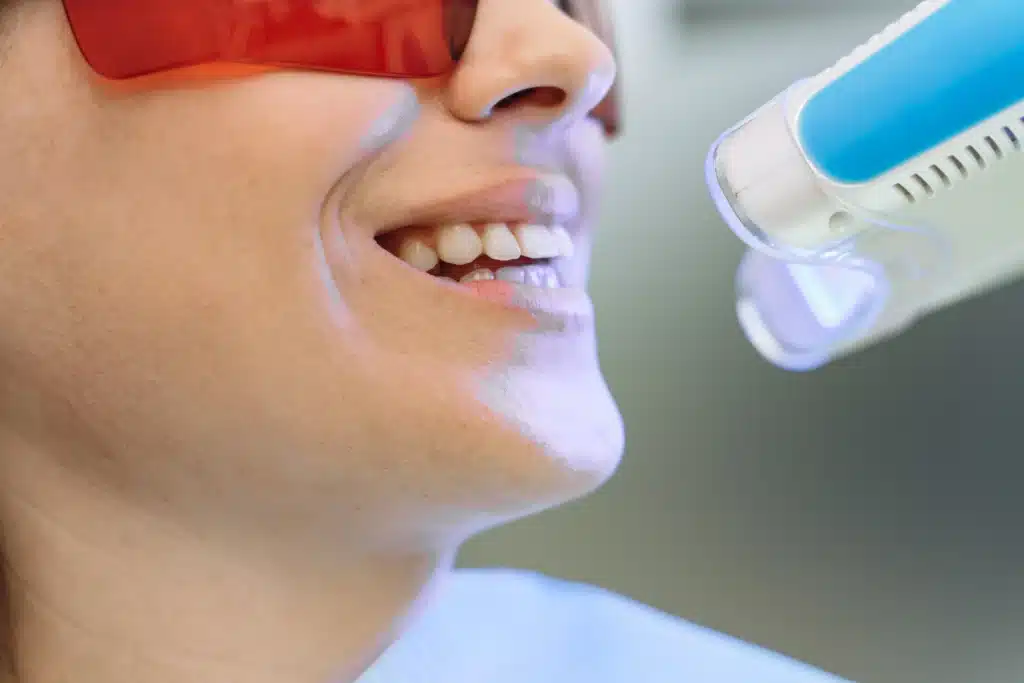
For a smooth teeth whitening experience and to minimise the risk of possible side effects, it is crucial to follow these guidelines:
Patients should be aware of these possible complications before undergoing teeth whitening treatments.
One of the primary risks associated with teeth whitening is an increase in tooth sensitivity. This is particularly the case for patients who already experience sensitive teeth. The whitening agents can penetrate the tooth enamel and reach the dentin layer, which contains the nerve fibres. This process can exacerbate sensitivity, causing discomfort during and after the treatment.
The chemicals used in teeth whitening solutions may also pose a risk to the gums, potentially leading to irritation or ulceration. This occurs when the whitening product comes into contact with the gum tissue (gingiva) or the mucous membranes in the mouth, leading to a chemical burn or irritation. It is essential that the teeth whitening agent is applied carefully by a professional dentist and that any excess is removed promptly to minimise this risk.
In addition to sensitivity and irritation, teeth whitening can sometimes lead to mild discomfort and pain in the teeth and gums. This discomfort is usually temporary and often occurs as a result of the bleaching agents used during the treatment, which can cause a mild inflammatory response in the dental nerves. For some individuals, this pain can be a deterrent from undergoing or repeating the whitening process. It’s important for patients to discuss pain management options with their dentist prior to starting treatment, which may include the use of desensitising products or pain relief medications to help manage any discomfort that arises after the teeth whitening session.
Choosing to have your teeth whitened by a dentist, rather than using an over-the-counter product, comes with a few practical differences:
Teeth whitening is not recommended for children under the age of 16. This is because the pulp chamber, or nerve of the tooth, is enlarged during this age. Teeth whitening done on children under the age of 16 could cause their teeth to become sensitive.
Individuals with sensitive teeth and gums, receding gums and/or defective restorations should consult their dentist prior to using a tooth whitening system. Anyone allergic to peroxide (the whitening agent) should also not use a bleaching product.
It is advisable that teeth whitening is done only on patients with healthy teeth and gums. This means that there should not be any gum problems and that the teeth should be decay-free, or the patient may experience irritation to the gums and teeth. In addition, before any whitening is done, the teeth should be plaque/tartar-free so that the whitening gel can be in direct contact with the teeth. As such, dental scaling and polishing by a dentist needs to be done beforehand.
Teeth that exhibit uneven discolouration might present challenges to teeth whitening treatments, potentially leading to inconsistent or patchy results. Areas of the teeth that are discoloured differently may respond at varying degrees to the whitening process, which could accentuate the unevenness instead of addressing it. Additionally, it is important to recognise that teeth whitening treatments are ineffective on dental restorations such as crowns, veneers, and fillings. Since these materials do not respond to bleaching agents as natural tooth enamel does, they will remain unchanged, possibly leading to a mismatched appearance as the surrounding natural teeth become lighter.
For more information on teeth whitening, refer to our guide on the six essential things to know about teeth whitening in Singapore.
The time it takes to see results from teeth whitening varies depending on the method used. In-chair treatments may provide very apparent results on your teeth, appearing several shades lighter within a shorter period. On the other hand, home kits typically require consistent application over a period of days or weeks. Results can be gradual and may vary based on the degree of discolouration and individual tooth response to the whitening agent. It’s important to have realistic expectations and to follow your dentist’s instructions for an optimal outcome.
At-home teeth whitening treatments usually involve using particular bleaching trays fitted to your mouth and filled with a professional-grade hydrogen peroxide bleaching gel. With this method, you might be able to see more lasting results after six to nine months.
When getting teeth whitening done through a dental practitioner, you’ll have access to stronger concentrations of bleaching agents. The effects of a chairside teeth whitening session performed in various clinics across Singapore will typically last anywhere from six months up to four years but may depend on factors such as lifestyle choices (e.g. excessively drinking coffee) and oral hygiene habits (e.g. proper brushing).
If needed, touch-ups can always be done down the line, so don’t worry if there are slight signs of discolouration showing up again over time, as these can be addressed via another exam with your dentist.
Permanent teeth whitening is not currently possible. All whitening treatments may need to be repeated over time to maintain the brightness of your teeth, especially if you consume staining foods or drinks or if you smoke. Good oral hygiene and occasional touch-ups may help in prolonging the effects, but the natural ageing process and lifestyle choices will eventually affect the colour of your teeth.
If repeated teeth whitening treatments do not yield satisfactory results, it may be time to discuss alternative options with your dentist. Some teeth do not respond well to whitening due to deep intrinsic staining or other factors. In such cases, your dentist might recommend more permanent solutions such as dental veneers or crowns, which can help provide a more consistent and long-lasting tooth colour that may be harder to achieve with whitening alone.
Generally speaking, professional teeth whitening done by a dentist is less likely to cause any pain or discomfort for most patients when performed correctly. At-home bleaching systems are also considered relatively mild and often do not cause much discomfort. Any sensitivity in your gums or teeth, side effects usually only last for a few days afterwards with no other long-term problems.
Patients in Singapore are recommended to be at least 16 years of age before undergoing teeth whitening.
If you have the following dental issues, please consult with your dentist before pursuing teeth whitening:
People with peroxide allergies should also avoid teeth whitening products as peroxide is typically a main ingredient.
To find out whether you are a good candidate, schedule an appointment with our dental clinician for
an initial consultation. Once the assessment of your dental health is done, our clinician will work with
you to develop a treatment plan that is right for you.
Since its inception in 2003, Family Dental Centre (FDC) has grown into a network of 10 dental clinics in Singapore, driven by the mission to provide quality and accessible dental care to the community. As part of the Oracare Group and recognised by both the Singapore Dental Council and the Ministry of Health, our focus is on upholding professional standards in dental services, a commitment that has led to our inclusion in Dental Asia and listing on HealthHub, Singapore’s national health information portal.
At FDC, understanding and meeting the individual needs of our patients is at the heart of what we do. Our expansion to multiple conveniently located clinics reflects our commitment to making dental care accessible to all, supported by a team of over 30 dental clinicians. Continuous professional development is key, ensuring our team is equipped to provide comprehensive care. In recognition of Singapore’s diverse culture and languages, our staff are conversant in English, Mandarin, and Malay, facilitating clear and effective communication with our wide-ranging clientele.
If you are unsure which option is right for you or your child, a dentist can take a look and talk you through what they find. You can book a consultation at your nearest FDC clinic, and our dentist will assess your needs and outline treatment options.