The human mouth typically has 32 teeth, including eight incisors, four canines, eight premolars, and 12 molars, of which four are wisdom teeth.
Wisdom teeth, also known as third molars, are the last teeth to emerge at the back of the mouth. They usually appear during late adolescence or early adulthood, typically between the ages of 17 and 21. Most adults have four wisdom teeth, two located at the top and two at the bottom sides of the jaw.
Wisdom teeth do not always have enough room to emerge properly, which results in the need for wisdom tooth extraction. In Singapore, MediSave may be used to help cover part of the cost, depending on the type of procedure.
The following signs may indicate that wisdom tooth extraction is worth discussing with a dentist:
Wisdom tooth extraction is generally categorised into two types, depending on how the tooth has emerged. Understanding the difference can help you know what to expect from your visit to the dental clinic.
Whether a wisdom tooth extraction is MediSave claimable can also depend on the type of extraction performed, as simple extractions are not claimable while surgical extractions may be.
When it’s used
Tooth has fully erupted and is visible
Procedure
Tooth is loosened and removed with forceps
Anaesthesia
Local anaesthesia
MediSave claimable
Not claimable
When it’s used
Tooth is impacted or has not fully emerged
Procedure
Requires an incision in the gum; the tooth may be divided into sections for removal
Anaesthesia
Local anaesthesia or sedation
MediSave claimable
May be partially claimable
MediSave may be used to help cover part of the cost of wisdom tooth surgery in Singapore, subject to the prevailing rules set by the Ministry of Health (MOH) and the CPF Board. Simple extractions, where the tooth is fully erupted and easily accessed, are generally not MediSave claimable.
MediSave claims generally apply to surgical procedures, such as wisdom tooth surgery involving impacted teeth, dental implants in Singapore, and related procedures like the removal of a fractured retained root. Simple extractions do not typically qualify. The clinic can advise on whether your specific procedure is claimable before treatment begins.
MediSave can be used by Singapore Citizens and Permanent Residents with sufficient balance in their own MediSave account. Depending on eligibility, you may also be able to use the MediSave account of an immediate family member, such as a parent, spouse, child, or sibling, subject to their consent and the prevailing CPF rules. Claimable amounts are set by MOH and CPF and are subject to change, so it is advisable to check current limits with your clinic or CPF directly.
The procedure for wisdom tooth extraction typically involves several stages:
During the initial consultation, the dentist will conduct an assessment to evaluate the condition and position of your wisdom teeth. Based on the assessment, they will personalise your wisdom tooth extraction plan and explain the purpose and risks of the recommended procedure.
Before any wisdom tooth extraction procedures, you will be anaesthetised in one of two ways: local anaesthesia or sedation. Local anaesthesia will numb the extraction site, helping you to stay conscious during the procedure. On the other hand, intravenous sedation will help you stay unconscious during the surgery.
Depending on your treatment plan, the wisdom tooth extraction procedure may involve a minor incision if the wisdom tooth is positioned beneath the gum line. The gum tissue will be lifted to access the tooth, and if necessary, the tooth may be sectioned for removal. After the tooth is extracted, the area will be sterilised, and the gums will be stitched back together.
Following the procedure, adhering to proper post-operative care is essential for healing and recovery. Minor bleeding from the extraction site is normal and can be controlled by biting on a gauze pad. Painkillers, antibiotics, and antiseptic mouthwash may be prescribed to prevent complications.
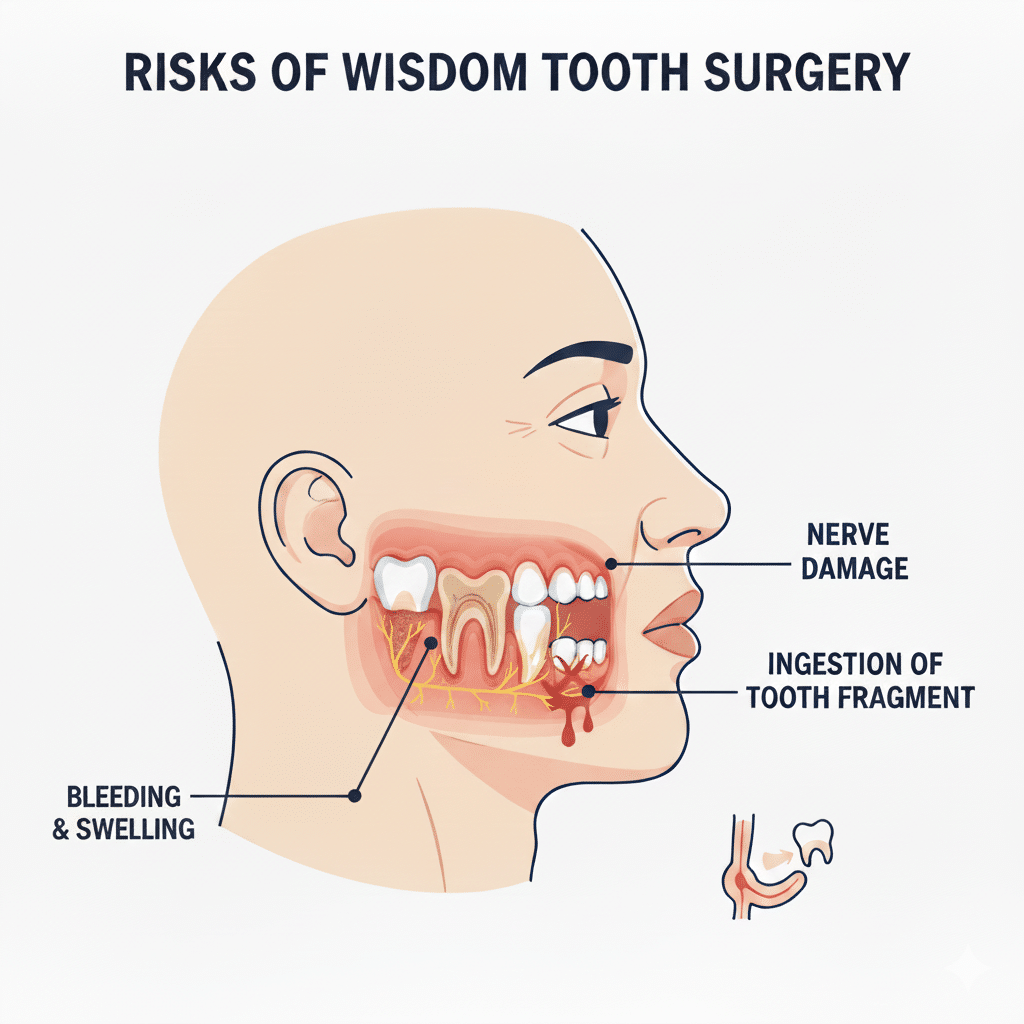
As with any surgical procedure, wisdom tooth extraction carries some risks, and your dentist will discuss these with you before proceeding.
Managing pain and discomfort after wisdom tooth surgery is important for a smooth recovery. While it is common to experience some level of discomfort post-surgery, this usually subsides naturally given time Here’s what to expect during recovery:
Swelling at the extraction site is common post-surgery. It can be managed by applying a cold compress to the cheek to help manage swelling and potential pain.
Painkillers may be prescribed to help with pain management. Follow the dosage instructions to minimise any potential side effects.
Maintaining a soft diet can minimise aggravation at the surgical site. Foods like yoghurt and soup require minimal chewing effort, reducing strain on the extraction site.
Gently maintaining oral hygiene helps support healing after wisdom tooth surgery. Your dentist will advise on when to resume brushing near the extraction site, and a soft-bristled brush is generally recommended to avoid disturbing the area.
Swelling and discomfort generally ease as the area heals, though this varies depending on the complexity of the extraction. Most people are able to resume daily activities as symptoms settle, and the gum tissue continues to heal naturally over time.
If pain persists longer than expected or worsens, contact your dental clinic promptly. Persistent or escalating pain could indicate a complication, such as an infection or dry socket, which requires immediate attention.
The total cost of wisdom tooth extraction or surgery in Singapore varies based on the condition of your wisdom teeth, how many teeth require removal, and the complexity of the procedure. During your consultation and radiographic assessment, your dentist will provide a clear, itemised cost breakdown tailored to your specific clinical needs. Key factors that influence the overall cost include:
Because clinical conditions vary from person to person, an accurate quote can only be provided after an in-clinic evaluation and X-ray assessment. To learn more about our fee guidelines or to schedule a consultation, please contact your nearest FDC clinic.
To find out whether you are a good candidate, schedule an appointment with our dental clinician for
an initial consultation. Once the assessment of your dental health is done, our clinician will work with
you to develop a treatment plan that is right for you.
Yes, the CHAS Dental Subsidy scheme covers wisdom tooth extractions. However, it’s important to note that the coverage and subsidy amounts may vary depending on the specific treatment required. Please contact the dental clinic to understand the specific details of this subsidy coverage.
In some cases, yes. Subject to their consent and the prevailing CPF rules, you may be able to use the MediSave account of an immediate family member, such as a parent or spouse, to help cover part of the cost. The dental clinic can advise on the relevant forms and requirements.
Not necessarily. Some wisdom teeth emerge fully and cause no issues, in which case removal may not be needed. Others may be impacted or positioned in a way that leads a dentist to recommend extraction. A dental assessment, often with an X-ray, can help determine what is suitable for you.
If your wisdom teeth are already causing issues and have yet to be removed, they can lead to various complications. These include overcrowding of the teeth, increased risk of tooth decay and gum disease, cyst formation, jaw pain, and potential damage to adjacent teeth. Not all wisdom teeth need to be removed, so a dentist can advise based on your specific situation.
Preparing for wisdom teeth removal involves a few steps to help ensure a smooth procedure and recovery. It is advisable to follow the dentist’s instructions, which may include arranging for someone to drive you home and taking any prescribed medications as directed. Understanding the pre-operative guidelines is also essential for a smooth experience.
The procedure itself should not be painful, as the area is anaesthetised beforehand. Some discomfort is common once the anaesthetic wears off, and this generally eases naturally given time. Your dentist can advise on pain management suited to your case.
Some bleeding after wisdom tooth surgery is common in the hours following the procedure. Using the gauze pad provided by the dentist and applying gentle pressure can help manage this. If bleeding persists or becomes heavy, contact your dentist.
Yes, maintaining oral hygiene is crucial after extraction. However, be gentle around the surgery site to avoid dislodging the blood clot. Brush your teeth softly using a soft-bristled brush, avoiding the extraction area for the first 24 hours. This will help to prevent infection and promote healing.
The healing time for wisdom tooth surgery varies. Swelling often improves within two to three days, enabling you to resume your daily activities. If you experience jaw tightness or if your extraction procedure is complex and involves multiple teeth, seven to 10 days are required. You will typically recover from any mild bruising within two weeks.
This depends on the complexity of the case. Simple extractions generally take around 30 minutes per tooth, while surgical extractions can take between 30 and 60 minutes per tooth, depending on individual circumstances.
A soft food diet is generally recommended in the initial days after extraction, with solid foods introduced gradually as tolerated. Hot, spicy, and hard foods are best avoided while the area heals, and your dentist can advise on a suitable timeline.
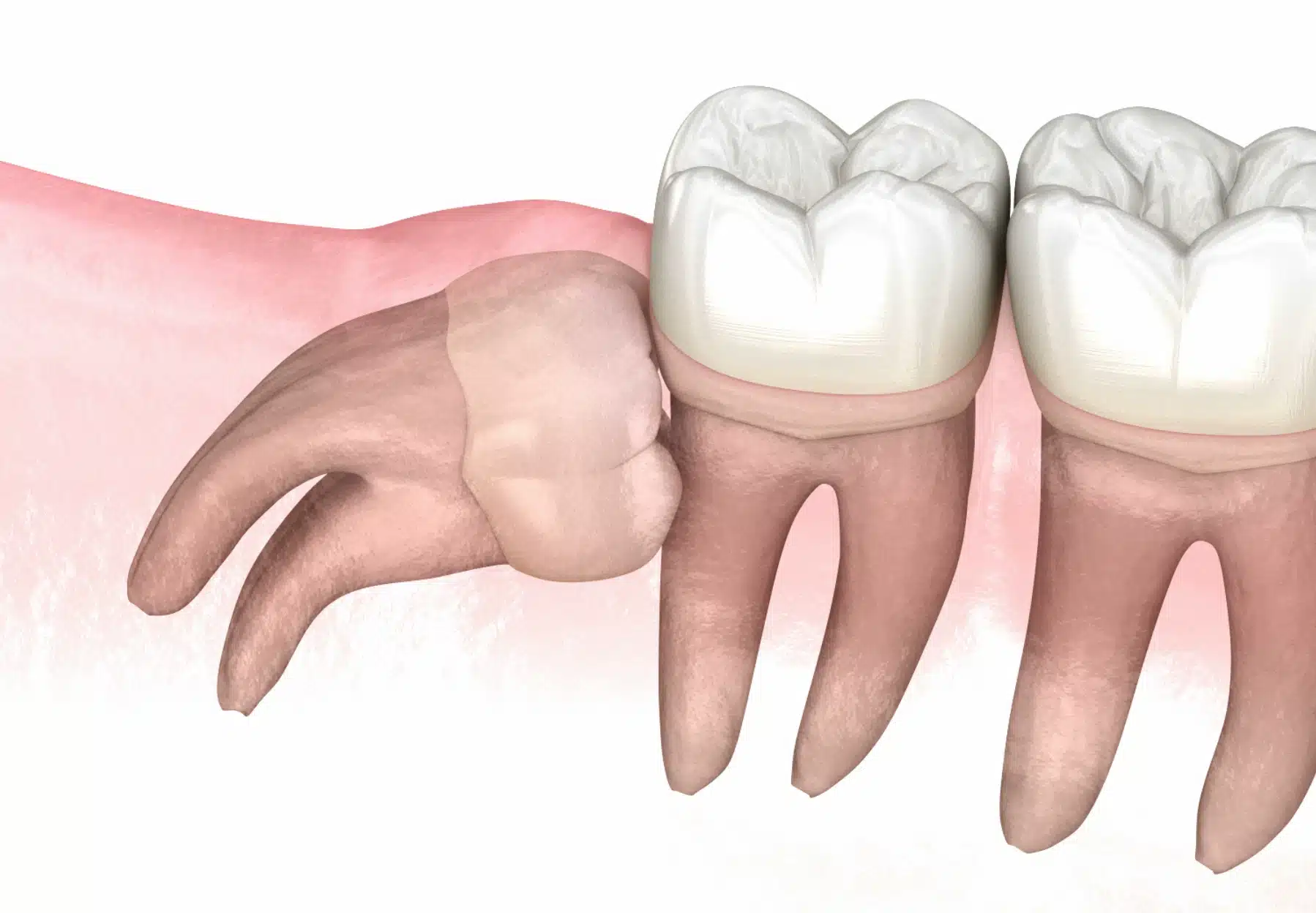
Wisdom tooth pain may arise from various factors, potentially due to their position as the last set of molars to emerge. Key contributors include:
Regular dental check-ups and timely interventions can help manage these various aspects of wisdom tooth pain. Understanding these pain sources also helps address the discomfort associated with wisdom teeth.

Wisdom tooth extraction is generally considered when a tooth is impacted, difficult to clean, or contributing to pain, infection, or crowding of nearby teeth. A dentist can assess whether removal is appropriate based on the position and condition of your wisdom teeth.
Since its inception in 2003, Family Dental Centre (FDC) has grown into a network of 10 dental clinics in Singapore, driven by the mission to provide quality and accessible dental care to the community. As part of the Oracare Group and recognised by both the Singapore Dental Council and the Ministry of Health, our focus is on upholding professional standards in dental services, a commitment that has led to our inclusion in Dental Asia and listing on HealthHub, Singapore’s national health information portal.
At FDC, understanding and meeting the individual needs of our patients is at the heart of what we do. Our expansion to multiple conveniently located clinics reflects our commitment to making dental care accessible to all, supported by a team of over 30 dental clinicians. Continuous professional development is key, ensuring our team is equipped to provide comprehensive care. In recognition of Singapore’s diverse culture and languages, our staff are conversant in English, Mandarin, and Malay, facilitating clear and effective communication with our wide-ranging clientele.
If you are unsure which option is right for you or your child, a dentist can take a look and talk you through what they find. You can book a consultation at your nearest FDC clinic, and our dentist will assess your needs and outline treatment options.