What to Expect at Your Child’s First Visit to the Dentist
During a child’s first visit to the dentist, the parent is often more nervous than the child. They read the dentist’s every expression for reassurance, and memories of their own childhood dental chair do not help. This is a common scenario.
All the more reason to schedule a visit with a children’s dentist early. This way, the child grows used to the clinic environment well before any actual treatment is likely to be needed. A dentist can also check how the teeth and jaw are developing, note oral hygiene habits, and pick up early signs of decay. If you’re a parent unsure of the when, where, and why of a child’s first dental visit, this guide walks you through it.
When Should Your Child First See a Dentist?
Many dentists suggest arranging a visit around the time the first teeth appear, or by the time a child turns one, though this can vary depending on the individual child and your specific dentist’s advice. There is no need to wait until there is a problem, as this first visit is more about getting the child used to the dental clinic than any actual treatment.
Early check-ups are not only for treating issues. They let a dentist monitor how the teeth and jaw are developing, flag anything that needs a closer look, and guide parents on brushing, feeding, and other daily habits.
A few signs can call for an earlier assessment:
- Tooth decay: Visible discolouration or dark spots on the teeth.
- Tooth pain: A child complaining of discomfort while eating or brushing.
- Bleeding gums: Gums that bleed during brushing or appear swollen.
- Mouth injuries: A fall or knock affecting the teeth, gums, or jaw.
- Delayed tooth eruption: Teeth that haven’t appeared by the age most children’s teeth do.
What Happens During the First Dental Visit?
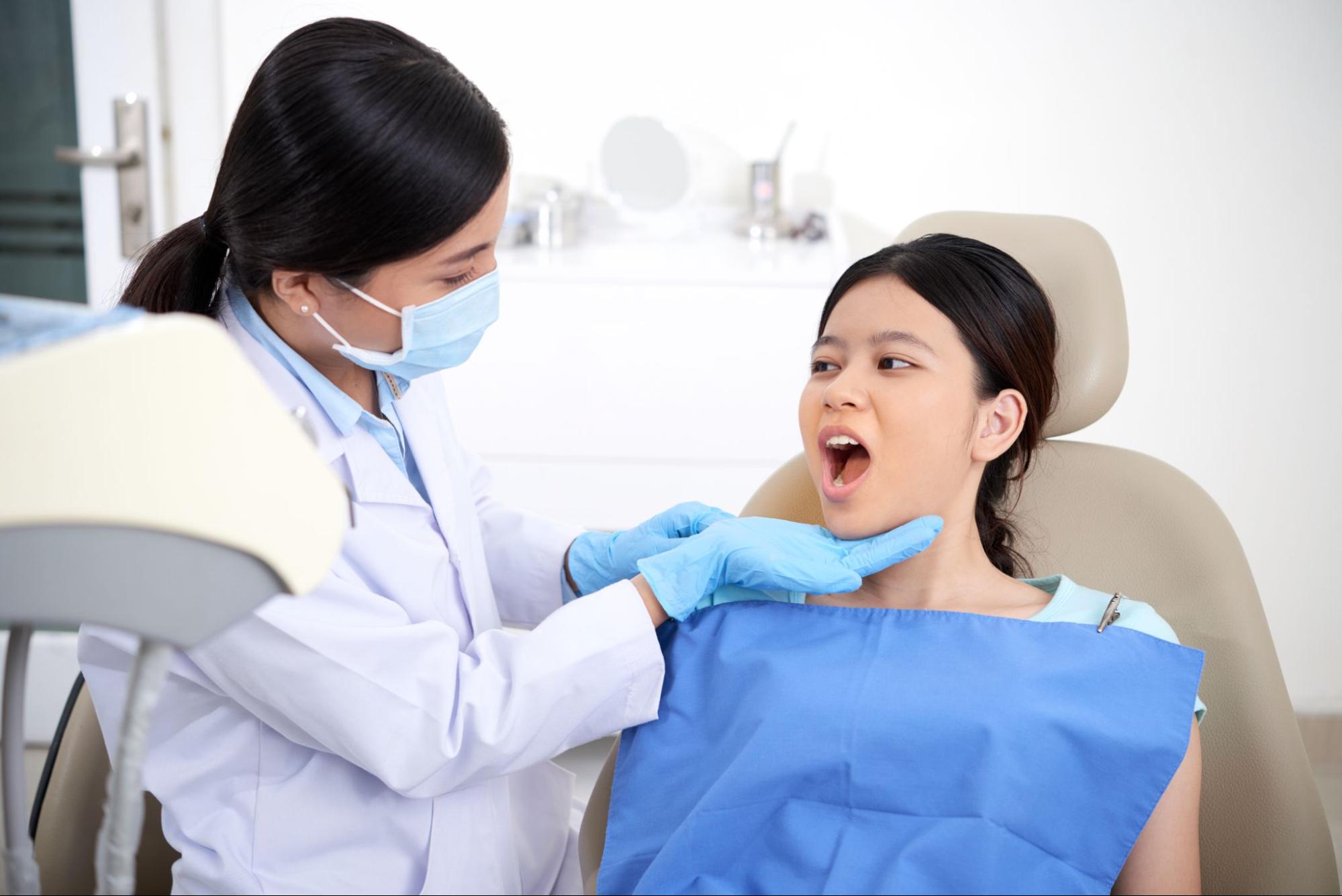
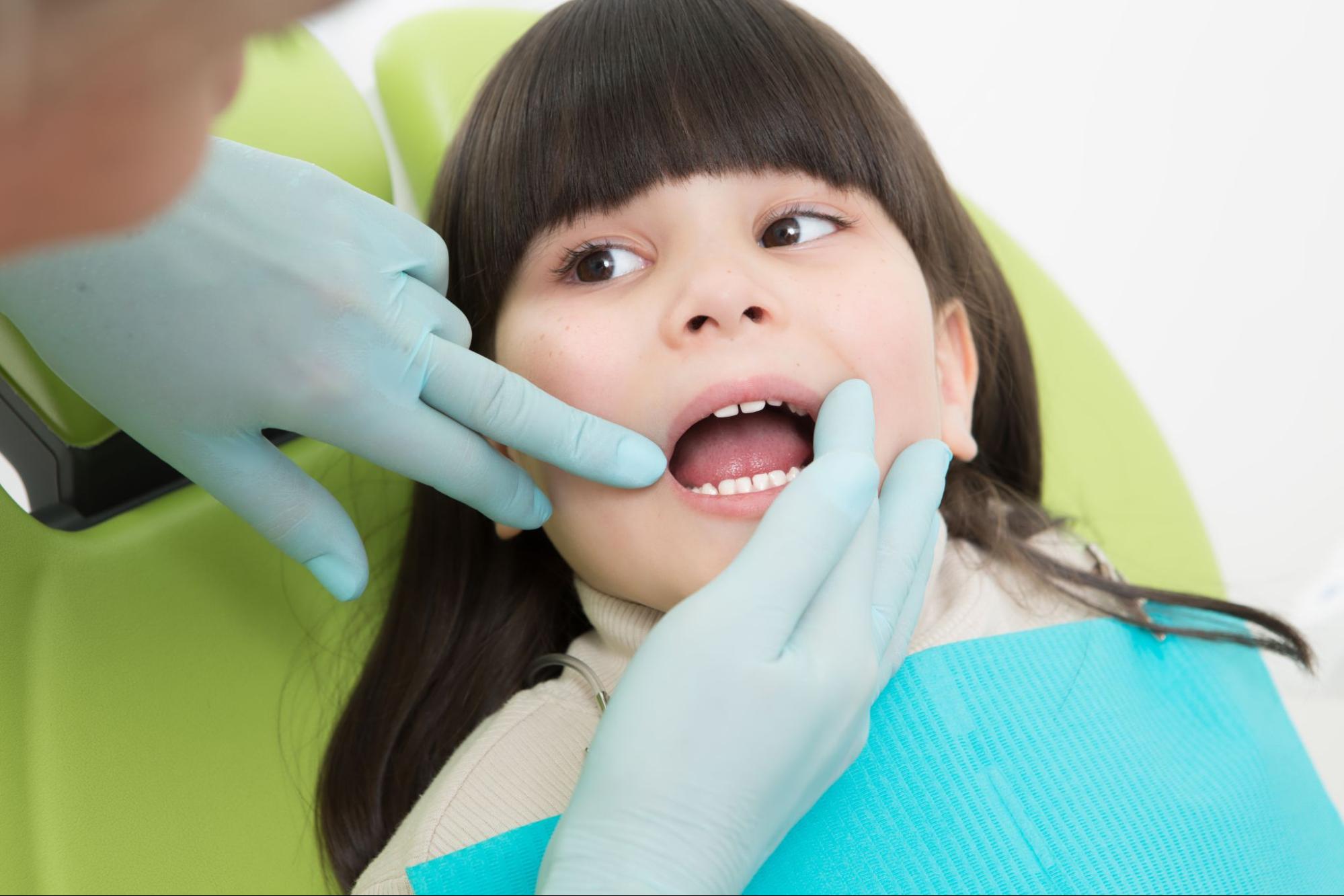
A first appointment with a children’s dentist is usually kept simple, focusing on helping the child feel at ease. Treatment plays a smaller part, if it comes up at all. What it typically includes:
- A light check of the teeth, gums, jaw, and bite.
- A conversation about the child’s brushing routine and diet.
- Advice on toothpaste, toothbrushes, and cleaning technique suited to the child’s age.
- Guidance on habits such as thumb-sucking, pacifier use, or bottle-feeding.
Treatment is not always part of the first visit. A dentist will recommend next steps based on what the check-up shows, and many first visits end with nothing more than a conversation and a few pointers to take home.
How Parents Can Prepare Their Child

How you introduce the visit at home can shape how a child responds. A few things tend to help:
- Use calm, ordinary language. Describing the visit as the dentist “counting” or “checking” their teeth keeps it low-key.
- Avoid words that suggest something to fear, such as “pain,” “needle,” or “drill,” even in passing.
- Bring a small comfort item if your child has a favourite one, such as a familiar soft toy.
- Pick a time when your child is well-rested. An appointment squeezed between naps or after a long day may be harder for everyone.
Common Questions Parents May Ask
These days, quick answers to common dental questions are only an online search away. However, because every child’s oral development is unique, generic advice cannot replace a professional examination. A few questions parents frequently search for or ask around this stage include:
- How often should my child see a dentist?
- Is my child brushing properly for their age?
- Should my child be using fluoride toothpaste?
- Could snacks or milk feeds be affecting their teeth?
- When should thumb-sucking or pacifier habits be looked at?
You can raise these questions directly at the appointment, since the right answer depends on your child’s age, oral health, and development. A dentist for kids can tailor guidance to what they actually see in your child’s mouth.
Building Healthy Dental Habits Early
Early visits help a child see dental care as an ordinary part of growing up. Parents play the larger role day to day: brushing twice a day, limiting how often sugary snacks appear, and helping with brushing until a child has the coordination to manage it alone.
A family dental clinic the whole household visits makes this easier, since the same clinic can support a child, their parents, and other family members with ongoing preventive care. As children grow, alignment sometimes becomes a separate concern too, and a dentist can advise later on whether braces in Singapore may be needed.
Making the First Visit a Positive Step
A child’s first dental visit is usually a calm introduction: some conversation, a light check, and a few pointers for home, with prevention and early awareness as the focus. Starting early can make later appointments feel more familiar, for both the child and the parent bringing them.
If your child is due for a first check-up, or you have questions about their teeth, you can book a consultation at your nearest Family Dental Centre branch, and our dentist will look at their teeth and talk you through what they find.